Analysis of the Magcarbon Bricks Manufacturing Plant Project Report
- Endru Smith
- Nov 26, 2025
- 5 min read

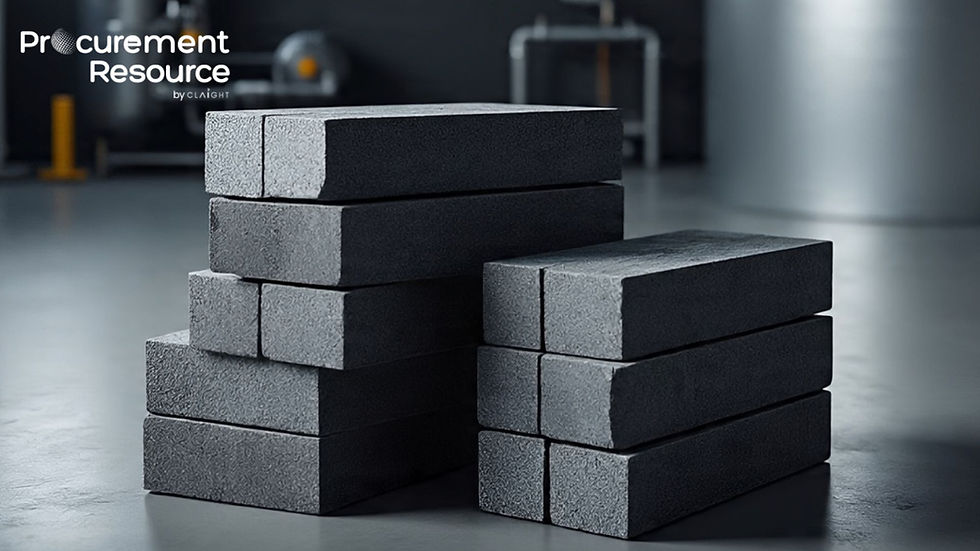
The global refractories industry continues to expand with the rise in steelmaking, non-ferrous metallurgy, and high-temperature industrial processes. Among the most essential refractory products are magnesia-carbon or magcarbon bricks, known for their excellent thermal shock resistance, high strength, and durability in aggressive operating environments. As demand intensifies, investors, manufacturers, and engineering consultants are increasingly relying on a detailed Magcarbon Bricks Manufacturing Report to assess feasibility, cost structures, operational requirements, and long-term profitability.
This article provides an in-depth overview of the cost model, project outline, feedstocks, market drivers, manufacturing process, key insights, and return on investment associated with setting up a magcarbon bricks production facility. It also highlights how Procurement Resource supports businesses with reliable data, industry intelligence, and cost analysis.
Project Overview and Importance of Magcarbon Bricks
Magcarbon bricks are composite refractory materials made primarily from high-purity magnesia and carbonaceous materials such as graphite. They are widely utilized in:
Basic oxygen furnaces (BOFs)
Electric arc furnaces (EAFs)
Ladles and steel converters
Secondary refining units
High-temperature metallurgy applications
Their unique ability to withstand rapid temperature fluctuations, chemical corrosion, and mechanical wear makes them indispensable for modern steel manufacturing. Given their high utility and rising adoption, investors and industry stakeholders seek structured guidance through a Magcarbon Bricks Manufacturing Plant Project Report, which outlines everything from raw materials to financial planning.
Request a free sample copy: https://www.procurementresource.com/reports/magcarbon-bricks-manufacturing-plant-project-report/request-sample
Cost Model: Capital Investment and Operating Expenses
A robust cost model is the backbone of any project feasibility study. The Magcarbon Bricks Manufacturing Plant Project Report provides a clear breakdown of capital expenditure (CAPEX) and operational expenditure (OPEX), which typically includes:
1. Capital Investments
Land acquisition and site development: Costs depend on geographical region, industrial zoning, and infrastructure availability.
Plant machinery and equipment: Mixing units, high-temperature furnaces, pressing and shaping machines, batch feeders, quality testing apparatus, and packaging systems form essential components.
Utilities setup: Power distribution, water systems, dust control, pollution management systems, and fuel supply networks.
Construction and civil works: Factory buildings, storage sheds, office areas, and quality control labs.
2. Operating Expenses
Raw materials (magnesia, graphite, antioxidants, binders)
Labor—skilled technicians and production workers
Energy consumption (fuels, electricity, furnace heating)
Maintenance and repair
Packaging and logistics
Waste handling and environmental compliance
A detailed cost model helps in evaluating the plant’s financial requirements, cost efficiencies, pricing strategies, and potential profit margins.
Top Manufacturers in the Global Magcarbon Bricks Market
The global market features several established players that influence pricing, technology adoption, and supply chains. Some of the top manufacturers include:
RHI Magnesita
Vesuvius
Krosaki Harima Corporation
Calderys
Resco Products
Minteq International
HarbisonWalker International
These manufacturers set industry benchmarks through innovation, high-temperature performance solutions, and advanced carbon bonding technologies. Studying them provides market entrants with insights into global competition and technological expectations.
Project Outline: Structure of the Manufacturing Plant Report
A comprehensive Magcarbon Bricks Manufacturing Plant Project Report includes:
Executive summary and project rationale
Detailed product description and specifications
Raw material sourcing and quality benchmarking
Plant layout and process flow diagrams
Machinery requirements and supplier lists
Utility and power requirement assessment
Workforce plan and organizational structure
Environmental impact assessment and regulatory compliance
Cost model and economic evaluation
Market outlook and demand-supply analysis
This structured outline ensures investors and entrepreneurs understand both operational and financial feasibility.
Feedstocks and Raw Material Requirements
The production of magcarbon bricks primarily depends on high-quality raw materials, including:
Magnesia (MgO): The primary refractory component; purity levels significantly affect performance.
Flake graphite: Provides thermal shock resistance and enhances mechanical strength.
Carbonaceous binders: Typically phenolic resins or pitch.
Antioxidants: Aluminum, silicon, and magnesium powders to prevent carbon oxidation.
Additives: For improving density, bonding, and thermal properties.
Reliable sourcing of feedstocks is a key pillar for operational stability and long-term profitability.
Market Drivers: What Fuels the Growth of Magcarbon Bricks?
Several factors drive the global demand for magcarbon bricks:
Growth of the Steel Industry: As crude steel production increases globally, the requirement for durable refractories in furnaces, ladles, and converters rises proportionally.
Rise in Infrastructure and Construction: Expansion of construction, automotive, machinery, and transportation sectors amplifies steel consumption, indirectly boosting magcarbon brick demand.
Increasing Industrialization in Asia-Pacific: Countries like China, India, and Vietnam are expanding industrial output, providing significant opportunities for refractory manufacturers.
Technological Advancements in Refractories: Improved carbon bonding, advanced antioxidants, and ultra-high-purity magnesia blends enhance product performance, driving premium product adoption.
Energy Efficiency and Furnace Durability: Industries are prioritizing materials that extend furnace life and reduce downtime—an area where magcarbon bricks excel.
Manufacturing Process for Magcarbon Bricks
The manufacturing of magcarbon bricks involves several technical steps. The Magcarbon Bricks Manufacturing Plant Project Report covers the full workflow:
Raw Material Selection and Preparation: High-purity magnesia and graphite are selected and quality-tested.
Mixing and Blending: All components—magnesia, graphite, antioxidants, binders—are blended using high-intensity mixers.
Forming and Pressing: The blended mixture is pressed into desired shapes using hydraulic or friction presses.
Curing: The pressed bricks undergo controlled heating to ensure proper bonding of carbonaceous materials.
Carbonization/Baking (Optional): Some facilities carbonize bricks to enhance strength depending on product specification.
Quality Control and Testing: Bricks are tested for density, porosity, strength, thermal shock resistance, and corrosion resistance.
Packaging and Dispatch: Finished bricks are packed and shipped for industrial use.
This process ensures that the final product maintains toughness under high-temperature industrial conditions.
Key Insights from the Project Report
Some essential insights highlighted in the project analysis include:
The cost of magnesia and graphite significantly influences production expenses.
Automation in mixing and pressing improves product consistency and reduces labor requirements.
Investment in pollution control systems is crucial for environmental compliance.
Proximity to steel plants increases market accessibility and reduces logistics expenses.
The refractory sector is becoming more competitive, increasing the need for technological innovation.
Return on Investment (ROI)
Given the rising demand for steel production equipment and high-performance refractories, the ROI for magcarbon brick manufacturing plants is generally attractive. Key ROI factors include:
Margin improvement through optimized feedstock sourcing
Stable long-term demand from steel and metallurgical industries
Potential for capacity expansion with minimal incremental investment
Increased profitability through export to developing industrial regions
High product value due to superior technical performance
A well-structured cost model combined with accurate market insights enables investors to predict cash flows, breakeven points, and long-term profitability.
Read Full Report With Table Of Contents: https://www.procurementresource.com/reports/magcarbon-bricks-manufacturing-plant-project-report/toc
How Procurement Resource Helps
Procurement Resource provides in-depth cost analysis, global price trends, production cost reports, and consulting services for companies planning to set up manufacturing units or optimize procurement strategies. Their expert team prepares detailed feasibility studies such as the Magcarbon Bricks Manufacturing Plant Project Report, offering actionable insights, cost modeling, and market intelligence for informed decision-making.
Contact Information
Company Name: Procurement Resource
Contact Person: Ashish Sharma (Sales Representative)
Location: 30 North Gould Street, Sheridan, WY 82801, USA
Phone: UK: +44 7537171117, USA: +1 307 363 1045, Asia-Pacific (APAC): +91 1203185500


Comments